As brass teachers, one of our greatest challenges is helping students practise effectively rather than simply spending time with their instrument. The best practice routines are not necessarily the longest; they are the most consistent, focused, and purposeful. Over more than two decades of teaching young brass players, I have found that successful students tend to share one common trait: they develop strong daily habits built around sound, airflow, and musicality rather than simply trying to play harder music.
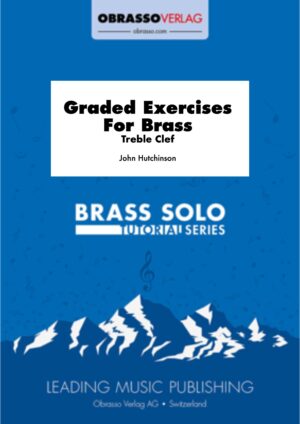
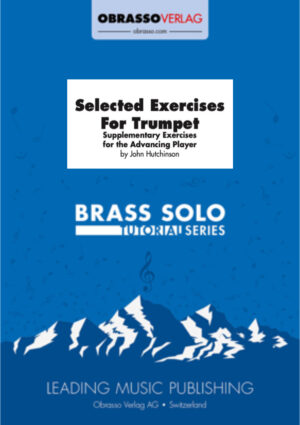
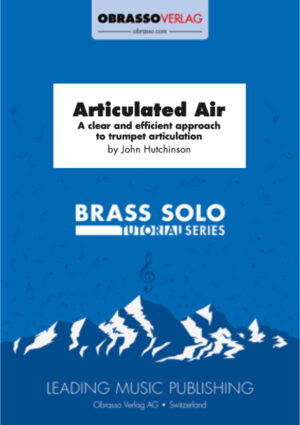
The materials in Articulated Air, Selected Exercises for Trumpet, and Graded Exercises for Brass all reinforce a simple but powerful idea: every aspect of brass playing begins with the air. The air drives the sound, the flexibility, the articulation, and ultimately the music itself.
Consistency Before Duration
Students often believe that practising for an hour once a week is equivalent to practising ten minutes each day. In reality, regular daily contact with the instrument is far more beneficial. Short, frequent sessions help establish muscle memory, develop stamina gradually, and prevent excessive tension.
For younger players, 15 to 20 minutes of focused practice can be highly productive. More advanced students may extend this to 45 minutes or longer, but the principle remains the same: quality always outweighs quantity.
A successful practice session should contain several different elements rather than spending the entire time on one area. This variety keeps students engaged while ensuring balanced development.
1. Start with Mouthpiece Exercises
The mouthpiece is an excellent place to begin. Simple buzzing exercises encourage students to focus on producing a centred sound with relaxed air and minimal unnecessary movement. The emphasis should always be on a relaxed breath in and a steady release of air.
Mouthpiece work develops:
- Sound awareness
- Airflow control
- Pitch recognition
- Embouchure stability
Students should keep the mouthpiece centred and avoid excessive movement. The goal is not volume but quality and consistency of sound. Even two or three minutes of mouthpiece work can establish excellent habits before moving onto the instrument.
2. Develop Airflow Awareness
Perhaps the most overlooked aspect of brass playing, particularly in the early years, is airflow. Many performance issues that students attribute to their embouchure can often be traced back to breathing and air support.
The airflow exercises from Selected Exercises for Trumpet and Graded Exercises for Brass use simple note patterns that allow students to focus entirely on maintaining a smooth, uninterrupted stream of air. The higher notes should be approached not with force, but with increased air speed and continued relaxation.
Useful airflow activities include:
- Breathing exercises away from the instrument
- Airflow patterns through simple scales
- Cichowicz-style flow studies
- Note-bending exercises
Students should think of connecting notes as though they are one long musical phrase rather than a collection of individual notes.
3. Long Tones: Building the Sound
Long tones remain one of the most valuable exercises a brass player can practise. Although they may seem simple, they teach students to listen critically to their own sound.
The focus should be on:
- Relaxed inhalation
- Consistent tone quality
- Stable pitch
- Controlled dynamics
- Careful listening
I always emphasise that students should not move on to the next note until they are satisfied with the beauty and control of the current sound.
A typical long-tone exercise might involve:
- Full relaxed breath.
- Sustain a note for 8 to 12 seconds.
- Listen for consistency throughout.
- Rest briefly.
- Repeat on adjacent notes.
A few minutes of thoughtful long-tone work can transform a student’s overall playing.
4. Flexibility Exercises
Lip flexibility is essential for smooth playing throughout the register. Students must learn to move between harmonic partials without creating tension or excessive mouthpiece pressure.
The flexibility studies presented in my books emphasise keeping the embouchure stable while allowing the air to do the work. Teachers should encourage students to think of releasing air slightly faster as they ascend rather than pushing harder.
Good flexibility exercises include:
- Simple lip slurs
- Harmonic series movements
- Valve combination flexibility studies
- Extended flexibility patterns
Students should strive for smooth, connected movement between notes with no bumps or breaks in sound.
5. Articulation Through Air
One of the most important concepts presented in Articulated Air is that the tongue should never be the primary driver of articulation. Instead, the air must lead and the tongue simply shapes the airflow.
This approach helps students:
- Produce cleaner attacks
- Improve clarity
- Reduce tension
- Develop greater consistency
Rather than thinking “tongue harder,” students should think “move the air faster.”
Simple articulation exercises can include:
- Repeated notes at moderate tempos
- Scale patterns with varied articulations
- Legato tongue exercises
- Circle of fifths articulation patterns
Using a metronome is highly recommended so students develop rhythmic precision alongside technical accuracy.
6. Double and Triple Tonguing
As students progress, multiple tonguing becomes essential. However, many students attempt to learn double and triple tonguing too early by focusing entirely on syllables.
The Articulated Air approach recommends verbalising “too” and “koo” before playing and ensuring that airflow remains continuous throughout. The tongue movement should remain light, with the air providing the energy.
A gradual progression might be:
- Speak “too-koo” evenly.
- Buzz it on the mouthpiece.
- Play on a single note.
- Introduce scales and patterns.
- Increase speed only when control is established.
Patience is critical. Consistency matters far more than speed initially.
7. Scales, Intervals and Technical Studies
Once sound, breathing and articulation have been addressed, students can move into more technical work.
Effective options include:
- Major and minor scales
- Chromatic exercises
- Interval studies
- Clarke technical studies
- Arban exercises
The materials in all three books frequently use scales and interval patterns because they simultaneously develop technique, ear training, coordination and fluency.
Students should always prioritise sound quality while playing technical exercises. Technical development without a beautiful sound serves little musical purpose.
A Sample 30-40 Minute Practice Routine
2-3 minutes: Mouthpiece exercises
5 minutes: Long tones and breathing work
3-4 minutes: Airflow exercises
3-4 minutes: Flexibility exercises
3-4 minutes: Articulation studies
5 minutes: Scales, intervals or technical studies
5-15 minutes: Music, repertoire, or a favourite piece
This structure ensures that a student develops all fundamental areas while still ending the session with music-making, which is ultimately why we play.
Final Thoughts
The most successful students are not always the most naturally ‘talented’. More often, they are the ones who establish positive habits and trust the process. As teachers, our role is to guide students towards routines that build a beautiful sound, efficient airflow, reliable technique, and musical confidence.
Whether working on mouthpiece buzzing, airflow studies, long tones, flexibilities or articulation exercises, the underlying message remains the same: maintain relaxed, supported air and allow everything else to develop from that foundation. When students learn that air drives the instrument and that consistency builds mastery, they gain the tools they need for long-term musical success.
 The Audio Concept